
 EN
EN Español
 Pусский
 العربية
Robotic Joint Motor System
A robotic joint motor system is a core motion component designed to provide controlled rotation, torque, and precision positioning for robotic joints. It converts electrical energy into mechanical motion, enabling robots to move with accuracy, repeatability, and smooth coordination across multiple axes. Such systems are widely used in industrial robots, collaborative robots, service robots, medical robots, and autonomous equipment where stable and efficient joint actuation is essential.At the heart of a robotic joint motor system is the motor unit, which may be a servo motor, brushless DC motor, or other high-performance drive type. The motor works together with a transmission mechanism, such as a gearbox, harmonic drive, planetary reducer, or direct-drive structure, to deliver the required output torque and speed. In many robotic applications, the joint motor must provide high torque in a compact form factor, allowing the robot to remain lightweight while still supporting heavy loads or fast motion.A key feature of this system is precise control. The motor is typically paired with an encoder, resolver, or other position-sensing device that monitors angle, speed, and direction in real time. Feedback signals are sent to a control unit, which adjusts current, voltage, and motion commands to maintain accurate joint behavior. This closed-loop control structure helps the robot achieve smooth movement, accurate path tracking, and stable force output even under changing loads or external disturbances.Robotic joint motor systems also emphasize efficiency and thermal management. Since joints often operate continuously or under repeated cycles, the motor must be capable of maintaining performance without excessive heat buildup. Advanced designs may include optimized winding structures, compact housings, heat dissipation paths, and low-friction components to improve reliability and service life. Noise reduction and vibration control are also important, especially in environments that require quiet operation or delicate manipulation.Another important aspect is integration. Modern robotic joint motor systems are often designed as modular units that combine motor, driver, encoder, brake, and transmission into a single compact assembly. This reduces installation complexity and improves overall system consistency. Depending on the application, the joint motor may be customized for high-speed movement, high-precision positioning, or high-load lifting.In terms of performance, a good robotic joint motor system should offer fast response, high torque density, low backlash, and strong repeatability. These qualities are crucial for tasks such as assembly, welding, inspection, picking, rehabilitation assistance, and humanoid motion. As robotics continues to evolve, joint motor systems are becoming more intelligent, more compact, and more energy-efficient, playing an increasingly important role in the development of advanced robotic platforms.
Sản phẩm
Danh mục:
-
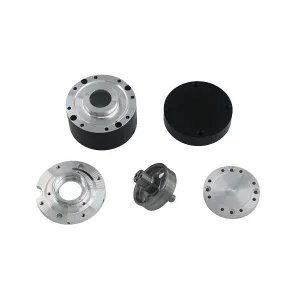
Humanoid robot joint motor
Phân loại của họ: Humanoid robotLượt xem: 13Số:Thời gian phát hành: 2026-09-21 16:14:11Humanoid robot joint motors are precision drive components designed for smooth and accurate robotic movement. They provide stable torque output, fast response, and reliable performance for humanoid robot joints. These motors are widely used in industrial robots, service robots, research platforms, and intelligent automation systems requiring high efficiency and precise motion control.
Tin tức
Danh mục:
Không có kết quả tìm kiếm!
Trường hợp
Danh mục:
Không có kết quả tìm kiếm!
Video
Danh mục:
Không có kết quả tìm kiếm!
Tải về
Danh mục:
Không có kết quả tìm kiếm!
Tuyển dụng
Danh mục:
Không có kết quả tìm kiếm!
Sản phẩm được đề xuất
Không có kết quả tìm kiếm!



 Điện thoại